Tuesday, May 30, 2017
Mingus Ah Um
I had never heard of Charles Mingus until I played in a college jazz band, and we were assigned to play "Boogie Stop Shuffle". Keep in mind that this was a killer band (of which I was probably the worst player), and Boogie Stop Shuffle was HARD. We routinely played bigger and more reputable schools off the stage, but this track kicked my butt.
My introduction to Mingus' work as a player was, thus, very similar to my experience of enjoying him as a listener. Mingus was fantastic at creating endlessly challenging music to the player and the listener, and a brilliant tonal storyteller.
Mingus Ah Um is Mingus' most widely appreciated record (although not my favorite, Changes Two). Considered to be in the canon of jazz greats, it deserves every laudatory review it gets. Perhaps the most magnificent thing about Mingus, and about all truly great artists, is the degree to which they can tip their cap to their influences without mimicking them. Thus, you can hear the influence of all of Mingus' favorite genres and artists in his music, but he always gives it his own Mingusan (sp?) twist to make it immediately recognizable as his own.
The first track "Better Git it in Your Soul", for instance, is a fantastic homage to gospel music translated through the vocabulary of jazz. Mingus' frequent shouts over the music of "oh Lord!", "Hallelujah!", "oh yes I know!" bring to mind the setting of gospel music without feeling cheap or like a mockery.
The rest of the record follows this path magnificently, trending from bop to traditional jazz to blues and back again, all while maintaining an immediately identifiable voice that is positively inimitable. My personal track highlights are the civil rights protest song "Fables of Faubus", "Boogie Stop Shuffle", and the gorgeous "Self-Portrait in Three Colors". The record is without a dull or uninteresting spot, and is remarkably accessible to jazz fans and non-fans alike. It gets my full TRO seal of approval at a 10/10.
-TRO
Friday, May 26, 2017
What I'm Playing (Volume 6): Pokemon Trading Card Game 2
I promised obscure, didn't I?
I feel in love with nerdy trading card games with the Pokemon Trading Card Game (actual cards). My friends all collected them, and I weaseled a deal in which I would get their unwanted doubles. My parents wouldn't get me any...
Anyway, I spun those doubles into some pretty decent decks through some savvy trading, including a fantastic Dewgong for Snorlax trade that remains my pride and joy.
But unfortunately, the fad faded, as fads normally do. My love for the game never faded, however, which is why one of my all time favorite Game Boy games is the Pokemon Trading Card Game. It gave me a chance to build a collection of cards without paying real money and enjoy the mechanics of a game I still enjoy to this day.
So imagine my delight when I discovered the other day that a Japanese exclusive sequel to one of my favorites had been released! And that there is an English translation online!
Well, I've been a bit disappointed, but not as disappointed as someone who doesn't like the card game as much as I do would be. Translation issues aside, as I can't hold the people who made the game responsible for that, the sequel is one of the lazier ones I've seen. All of the gyms look identical, they added very few cards, and the world map is basically identical.
The soundtrack is again excellent, but about 80% of it is recycled from the previous game. As I love that soundtrack, it's not too bad, but it is pretty lazy.
Basically, I'd recommend this to people who both love the card game itself, as well as the original Game Boy game. If you enjoyed that one, you'll probably enjoy this one too. But the best comparison I'd make is that this is equivalent to Madden 17's relationship to Madden 16. A few new features, a few new players, identical look and mechanics, and little to complain about for those who love the game.
I'd give it a 6.0/10 for most people, but I'm enjoying it at an 8.0 level because of my love the original.
*Edit* This is the reason I no longer submit reviews before I finish the game! This should be the last of these.
While I still agree that the game is somewhat lazy, I did not know before writing the review that an entire new continent exists that you can travel to once you clear out the continent from the first game. As a result, there are quite a few new places to explore and fun things to do. Also, the number of new cards is more than I gave it credit for, and the new ones allow for some new and interesting deck combos. They also throw new wrinkles in by making you play certain players with decks that meet certain qualifications, as well as playing under special rules that favor the AI (which is still dirt tier dumb, as in the first game). This prevents you from just making a deck that beats the type of Pokemon found in the gym, and steamrolling the whole gym with it.
I still found this game to be lacking generally, but is much more enjoyable for the person who completed the first game and enjoyed it than I thought it would be. As a result, I'll change my review to a 6.5 for the average player, but I enjoyed it at an 8.5 level.
-TRO
Thursday, May 25, 2017
What I'm Playing Update
This is just a notice to say that I'm no longer going to be doing a handheld and console game at the same time for the What I'm Playing series. Rather, any time I pick up a new game, and plan on playing it to completion, I'll write up a review of it for the section. So tomorrow will be an extremely obscure little title for review. It's going to be, the very best, like no review ever was.
-TRO
-TRO
What I'm Playing (Volume 5): Shovel Knight: Specter of Torment
On the handheld front, I'm still playing Tales of Phantasia, and still enjoy it quite a bit. But I discovered that the fine folks at Yacht Club Games had released a new, free content update for Shovel Knight, featuring an entirely new playable character with his own campaign, Specter Knight!
If you're a regular follower of the blog, you'll know that I'm a big fan of Shovel Knight. I found the second campaign, Plague of Shadows, to fall quite short of the fantastic performance of the original campaign. Plague Knight's controls were a bit wonky and unpredictable, and the levels you progressed through were pretty similar to Shovel Knight's, albeit tooled a bit to account for Plague Knight's new bomb based kit.
So I began Specter of Torment with some degree of trepidation, although I had been badly yearning for another trip through the Shovel Knight universe, so I was pretty excited. And Specter of Torment delivers, for the most part.
A prequel to the original game, the expansion follows Plague Knight as he gathers up followers for the Enchantress. These followers will be well recognized as the bosses from the original game. In addition to this prequel portion explaining from where the bosses came, however, you also get a more in-depth look into the back story of Specter Knight, finding out who he is, where he came from, and why he became Specter Knight. This makes for a compelling narrative in the Shovel Knight universe, and in typical 8-bit fashion, the story is primarily told in visual and musical media, rather than with text.
The gameplay additions for the expansion are mostly excellent. Specter Knight feels completely different than Shovel Knight, as his more ninja-style kit enables you to walk up walls, jump off walls, and dash through enemies in the air with a slash. This simple kit, similar to Shovel Knight's, is used to get around a wide range of obstacles, and most importantly, always feels fun, rewarding, and responsive. Slashing your way across huge pits is super fun, and you rarely feel like the mechanics have cheated you by being unfair, but rather that the game rewards skilled playing and good timing. This is particularly essential, especially since the game is fairly difficult.
This time around, the levels have been completely redesigned to fit Specter Knight's kit, and some are completely unrecognizable. Several bosses are completely different in play style (like Propeller Knight's fantastic boss fight), and there are new bosses as well.
If there's one critique I have of the game, it's that the bosses have become a bit too easy this time around. Shovel Knight's mobility was very limited, making for a more strategic and skill based combat. Specter Knight, on the other hand, can quickly fly around the stage using his slash dash, and has a large period of invulnerability during the slash itself. For many bosses, you can simply mash the slash button as Specter Knight dives and slashes them, bounces back, and then dives and slashes again. The retaliation of the bosses is also muted using this tactic, due to the the invulnerability granted during the slash. There is also an item you can get (after the very first level) that will restore large chunks of Specter Knight's health, making a more reckless, all out approach at dive bombing as fast as possible the best path, due to a reduced need to conserve health.
The music is again excellent, as composer Jake Kauffman returns with a tremendous selection of old songs, remixes of old songs, and plenty of new tracks. I just wish that I could have gotten this new, updated soundtrack to go along with my well-worn copy of the original (I may be able to do this, but I haven't seen how, yet.)
If you like Shovel Knight, retro gaming, chiptune music, or just good family fun, I'd highly recommend Specter of Torment. It's free for Shovel Knight owners, can be gotten on just about every gaming platform in existence, and is an excellent return to form for a very talented group of developers. I'd give it a 9.3/10.
-TRO
Friday, May 19, 2017
Cowboy Bebop
Whenever I get asked about my favorite TV show, I reply with Cowboy Bebop. I'm not as big of an anime fan as I once was, but this should positively captivated me when I watched it at first, and it's only gotten better with age. I've watched it in the Japanese with subtitles once, and then watched the English sub at least 3 times.
The offspring of creative genius Shinichiro Watanabe, Cowboy Bebop is the story of Spike Spiegel and his gang of misfit bounty hunters. Jet is a former police officer, Faye is an unlucky professional gambler, Ed is a child tech prodigy of uncertain gender, and Ein is a data dog (what?). The show features a fantastic mix in which some episodes are purely episodic, following the crew as the pursue bounties across space, and others forward the main story of Spike. The episodic episodes will frequently give a chance for character development for the other 3 characters (Ein doesn't have much character development, as one might expect from a dog).
The primary story follows Spike's attempt to distance himself from a painful past as part of a crime syndicate, and the relationships that he built while there.
With some anime that follow this basic structure (some episodic, some following a story arc), one part of the structure can be much better and strong than another. Rurouni Kenshin, for example, tends to become stale and boring during the episodic portions, whereas the story arcs of Kenshin dealing with his past as a manslayer are when the show really sparkles. Bebop, however, always shines regardless of approach.
The show is hilarious, with Ed and Ein in particular providing fantastic comic relief, while the straight characters of Spike and Jet serve only to accentuate the fantastic comic vision of Watanabe. The episode Mushroom Samba is outrageously funny, perhaps being surpassed in comic brilliance only by Baseball Blues, an episode from Wantanabe's other anime, Samurai Champloo (a full review of that to come).
The music of the show is phenomenal, and provides a sort of skeletal structure to the show. The title Cowboy Bebop includes a form of Jazz (bebop) popularized by Charlie Parker and and perfected by Dizzy Gillespie. Most episodes include a reference to a genre or style of music or dance or a song, and feature music in the episode that go along with the title. The soundtrack by Yoko Kanno, and performed by her band Seatbelts (created for the show), shows her fierce creativity in composition and demonstrates the band's remarkable aesthetic versatility to transition from genre to genre with ease. The opening theme is particularly notable, and is to this day the only theme song of any TV show that I will listen to in its entirety in each and every episode.
The animation is still, nearly 20 years later, the best I have ever seen in any TV show. The animation in the movie is the best I've seen, period. If you don't believe me, go check it out.
The fights are beautifully choreographed, and each character has a unique and immediately identifiable fighting style that translates brilliantly to screen. Spike, for example, fights using the no motion wasted minimalism of Bruce Lee as an obvious inspiration, while Jet has a more rough and tumble brawling style.
The pacing and story of the show are brilliant. I don't want to give away anything, but I will simply say that the ending is perfect, and the show is a bit too short for a perfect length, which is in itself perfect. Like no other show or movie I have ever seen, when I first finished Cowboy Bebop it was like an old friend had left me. I craved more, which is what artistic perfection looks like. When I think about other things that leave me that way, it's frequently music, including Kind of Blue (Miles Davis), Milestones (Miles), Bitches' Brew (Miles), In a Silent Way (Miles), Ah Um (Charles Mingus), Changes Two (Charles Mingus), Leviathan (Mastodon), and Blackwater Park (Opeth). There may be a few others, but note that these are all short form art. There are a few games that have declared endings about which I feel that way (Shovel Knight, Super Mario World, Mega Man X, Link to the Past, a Link Between Worlds, Chrono Trigger, Final Fantasy V, VI, and VII, and a few others, probably), but most are simply too long to be left wanting more. The longer the experience, the more chinks in the armor begin to show, and the more my limited attention span tends to wane.
At nearly 10 hours of content, that Bebop leaves me desperately wanting more shows just how few chinks there are. It's a show for which I crave a sequel, but am secretly glad I never got one (especially since I got the brilliant Samurai Champloo from Watanabe instead). In fact, I can't think of one bad thing to say about this show. If you haven't watched it before, it's beautiful art for anyone, not just anime fans. And you may watch it and find yourself becoming a bit of a Japanophile like me. I'd give it a 10/10.
-TRO
Wednesday, May 17, 2017
Goodbye Yellow Brick Road
Elton John is one of my favorite rock and roll artists, and Goodbye Yellow Brick Road is probably my favorite of his records. This record is particularly notable for Elton's and the band's ability to seamlessly transition between genres, and nail most of them. For example, Funeral for a Friend/Love Lies Bleeding is among the best progressive rock songs ever written, and really showcases the band's superb musicianship, nailing really tricky and technical passages with ease. After the opening track, however, the record transitions into the beautiful but mournful pop tribute to Marilyn Monroe, Candle in the Wind (which you have probably heard if you have a pulse and a radio). The third track, Bennie and the Jets (which you have also heard), feels a lot like a more experimental Beatles song, and Elton and the band again nail it. The fourth track solidifies what may be one of the best first four songs ever assembled in a rock album, with the title track, another beautiful pop ballad. The back end of the record is also strong, with fantastic songs like All the Girls Love Alice, and Your Sister Can't Twist But She Can Rock 'n Roll)
Despite the strength of these first four tracks and the back end, however, perhaps my favorite moment in the record is the fantastic Saturday Night is Alright for Fighting, one of the best hard rock songs ever written. If I ever, against all odds, wound up in a cage fight, this would be my entrance theme. Go check it out if you've never heard it.
With all that said, it's not a perfect record. There are several tracks that aren't great, including Grey Seal, This Song Has No Title, and Jamaica Jerk-Off. I think rather than a double album, this one may have been better if pared down to a single. But classic rock is ultimately remembered for its great songs nowadays, and Goodbye Yellow Brick Road manages to pack an immense number of instant classics into our repertoire. For that, you should go check it out. I'd give it a 9/10.
-TRO
Tuesday, May 16, 2017
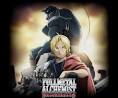
Full Metal Alchemist: Brotherhood
I've enjoyed anime since I caught my first episode of Ronin Warriors early on a Sunday morning on one of the broadcast tv networks. I was captivated by the humor of it, the original and different art style, and the superb and otherworldly action. While much of what I used to like has aged poorly, there are still a few series to which I can go back and watch seemingly endlessly. And one of my top three favorites has to be Fullmetal Alchemist: Brotherhood.
The series focuses on two brothers (Edward and Alphonse Elric) who are alchemists, which means that they can alter the substance of matter in impressive ways. The use of alchemy is governed by the law of equivalent exchange, which states that in order to use alchemy, something of equivalent value must be exchanged. So, for example, you could take a big stone and use alchemy to reshape it into a weapon. Ed and Al's mother dies, and they attempt to use alchemy to bring her back to life, which is forbidden in alchemy. Their attempt fails, and Ed loses an arm and a leg, and Al loses his whole body as the price of equivalent exchange. Ed attaches Al's disembodied soul to a suit of armor, and then they wander the globe, looking for a way to return their bodies to normal.
I watched the original Fullmetal Alchemist in college, and was impressed, but left a bit wanting. The first part of the show was excellent, but it seemed to kind of fall apart as the show went on, and ended on a seriously bizarre note. They had a decent movie after the series that kind of resolved some of the problems with the ending, so I was satisfied, at least. And I greatly enjoyed the action, music, and animation, so I had little to complain about.
Then I went through a phase in which I was checking out tons of manga from the library, and finding that I enjoyed a bunch of it much better than the anime. Dragonball, for example, is SO much better in the manga. It's paced superbly, compared to the agonizingly drawn out pace of the anime. I mean, 30 episodes for a fight between Frieza and Goku? With blatantly reused animations in each episode? Come on.
But my biggest surprise was in reading the Fullmetal Alchemist manga, which adhered very closely to what I remembered in the anime, but had a completely different ending. And the manga version was much more enjoyable than what I remembered from the anime.
So I went and did a bit of research to find out what exactly happened.
It turns out the original anime was begun during the run of the manga, and caught up to the most recent edition of the manga. At that point, the author (Hiromu Arakawa) requested that the runners of the anime come up with their own story and ending based on the character, so that she could continue to focus on her work on the manga.
Fortunately, in 2009, at the conclusion of the manga, they made a new series that adhered more closely to the manga, and it's one of my all time favorites. It's probably the most hilarious anime I've ever seen. The action, art, and music are all beautiful. The characters are all easy to relate to and likeable. The English dub has some of my favorite voice-over work of all time. One of my favorite things about the series is that it's written by a woman, despite being a shonen (anime for boys). As such, the female characters in the show are much more realistic and play more of a major role in the plot than in many anime, where they can tend to be objectified a bit more, or just be sort of pure badasses. The women in this are strong, but also are believable as women, not just male characters given a female body, or an excuse for teenage hormone drama and fan service.
There are stretches of the show that drag on a bit long, and the manga is a bit better for that. But if you don't fancy sitting and reading 27 tankobon volumes worth of manga, the anime is really excellent. And the music, voice-over, and animation in the anime make it worth watching even if you have read the manga.
I'd give Fullmetal Alchemist: Brotherhood a 9.4/10. It's a fine example of anime done well, and you should go check it out. Even for non-anime fans, it'll be accessible and enjoyable.
-TRO
Subscribe to:
Posts (Atom)